Released in 1987, the Eternal Idol is Black Sabbath's thirteenth studio album, and their first with new singer Tony Martin. Widely considered to best either the best or second-best album of the Tony Martin years, the album has even earned a deluxe edition reissue in addition to all the recent praise. Is the Eternal Idol the best album of the Martin years? Read on my fellow headbanger...
First up is "The Shining". The lead single from the album, it is certainly catchy and attention-getting. Featuring a very heavy Tony Iommi riff, I really enjoy the song. Top-notch drumming (the metallic-sounding drums have been fixed from Seventh Star), and great vocals from the very under-rated Tony Martin. A tad too long-winded, but still a great song. "Ancient Warrior" is a great song, featuring one of the heaviest riffs ever created by Tony Iommi. Concerning what seems to be the legend of a dead warrior, the song is a bit on the silly side lyrically, but the great riff, hard-hitting drumming from Eric Singer, and technically brilliant vocals from Martin round out a nice package, one of the strongest songs on the album.
"Hard Life To Love" continues Iommi bringing out all the aces, a phenomenal verse riff. It seems to be about someone living life without reservations and morals, burning out quickly. A little "Whitesnake-ish" in terms of production, a bit too sheen and polished, again bearing the hand of famous "over-producer" Jeff Glixman. A decent song. "Glory Ride" is my favorite song on the album. Concerning the Battle of Britain, I love the imagery painted by the lyrics, similar to "Aces High" by Iron Maiden, lyrically speaking. A side note, I actually prefer the version of the song sung by Sabbath's previous singer, the late "Ray Gillen". The deluxe edition contains the album mixed with Ray Gillen's vocals, so you can decide whose vocals you like better. Overall, I prefer Tony Martin as a singer, but this is one of the tracks where Gillen just did it better.
"Born to Lose" is another bluesy-metal song. Definitely over-processed, I really don't like Eric Singer's drum sound here, far too busy and high in the mix. Also, Martin's vocals need not be covered in so many effects, especially considering his raw talent. The "evil woman" type lyrics are decent enough, but Martin sounds a little green for this type of song,too young and bright-eyed to truly bellyache about this lyrical topic. Like a fine wine, I believe that Martin's vocals and lyrics only got better as Sabbath went on (except Forbidden, stay tuned for that review in a few weeks). A decent song, but not a stand-out for me. "Nightmare" shows the coming direction the band would take for their next album, Headless Cross. The song again reminds me musically of Whitesnake, featuring a very bluesy riff. The song concerns the trickery of Satan, a common theme explored by the band during the Martin years. I like the catchy chorus, and the riff is certainly enjoyable, but something doesn't work for me about the song. I believe it is the production of the song, a glossy 1980s "knob-job" that just sounds too slick and processed, miles away from the 1970s and even early 1980s rawness of Sabbath.
"Scarlet Pimpernel" is gorgeous. A classical-sounding guitar piece, I find the song relaxing and delicately beautiful. A little too heavy on keyboards and effects, but it is my pick for my favorite of Tony Iommi's many guitar instrumentals. Sadly, the song is very short. "Lost Forever" is a very heavy tune, featuring one of Iommi's driving riffs. I like the bass work of Ozzy/Rainbow bassist/songwriter Bob Daisley,much more prominent in the mix than the previous album. The song seems to concern damnation, someone who has become pure evil. Iommi's solo smokes here, the best lead on the album. Martin sounds very good, over-singing a bit, but quite an enjoyable vocal performance. Last up is the title track. "Eternal Idol" is a very slow and long song. Like the song "Black Sabbath", a plodding riff drives along the song. A little keyboard-heavy, but it sounds pretty good, the best-produced track on the album, very atmospheric and creepy. The cryptic lyrics perfectly accompany the unsettling music. I like the track, and it is actually quite similar both lyrically and musically to "God is Dead?" from the new album "13".
"the Eternal Idol" is a decent album, but certainly not my pick for the best album of the Martin years. A little too slick in terms of production, it also seems to me that Martin was a little over-whelmed by being thrust into Sabbath so quickly upon the departure of Ray Gillen. While he sounds very good, I believe that he would come into his own later in the band's discography. Leaps and bounds better than Seventh Star, but only the start of bringing back the reputation of Black Sabbath.
Rating-7/10
Sunday, 30 June 2013
Metallica-Ride the Lightning-Review
Released in 1984, Ride the Lightning is Metallica's second studio effort. Often sandwiched between the mighty Kill Em' All and Master Of Puppets, I feel that the album is the proverbial "middle child" of the Metallica discography, slightly ignored and under-valued compared to its siblings.
The album opens with the beautiful classical guitar introduction of "Fight Fire with Fire". After about forty seconds, the band unleashes an all-out metal attack. Like "Children of the Grave" by Black Sabbath, the song is a very "gloom and doom" look at the military-industrial complex that hangs over us in the modern world, very apocalyptic. A classic Metallica song to say the least, with fantastic drumming from Lars, one of his best drum parts in my opinion. The title track "Ride the Lightning" shows Metallica moving away from the break-neck speeds of Kill Em' All and more to a focus on developing melody. A strong condemnation of capital punishment, the song shows Metallica at their most political. Kirk Hammett is a revelation on the song, and you can start to see his solos moving towards a very melodic playing style, more refined than the "in your face" guitar attack on Kill Em' All. The song is one of the first "epic" Metallica songs, preparing us for what will come on the next album. Not as technically complex as the song "Master of Puppets", but a progressive step in that direction. In any case, a fantastic song.
"For Whom the Bell Tolls" is an absolute beast of a song. I have always loved the lead bass guitar introduction, delivered by my no.2 favorite bassist (Geezer is no.1) of all time, Cliff Burton. The lyrics are based on the Hemingway novel of the same name, and concern the experience of war, and all of its horrors from the perspective of a soldier. Lars keeps a solid and pounding beat throughout, and Hetfield delivers his best vocal on the album, and on of the best of his career. But the highlight for me is the lyrics and bass-work of the very missed Cliff Burton, the heart of Metallica. A great song, and my favorite on the album."Fade to Black" is likely the most famous song on the album, and has largely survived in the modern Metallica set-list. Gorgeously classical, the song is a very heart-wrenching tale of hopelessness and suicide. The riffs are crushing and bear the mark of Black Sabbath, very heavy for the band, but somehow softer due to the acoustics throughout. A great song, one of Metallica's best.
"Trapped Under Ice" is a fan-favorite, a deep album cut. More like something off Kill Em' All, it is the fastest song on the album. I have never loved the song, but I would not say it's a bad song, just more thematically and musically in line with their first album, a bit of a "refugee" on this album. Lars' drumming is an obvious highlight, and the lyrics are pretty stark and bleak, but not a classic "Tallica" song for me. "Escape" is another deep cut. A classic metal tale of not following the rules, the song feels a bit hollow lyrically, an all-too common theme explored during 80s metal. I honestly don't care for the song, sounding positively slow motion compared to most tracks off Kill Em' All. The whole song feel anti-climatic, like a demo fleshed out to fill the length requirements of the album.
"Creeping Death" is an obvious favorite of many on the album. Like a cold shower, the song wakes us from the coma that "Escape" put us in. The best song ever written about a plague, I love everything about this song, it is the sound of Metallica beginning to approach their creative peak that would culminate on the next album (Load still sucks, and you know it).Lars is like a freight train running down the tracks, and I can't understand why he has some many detractors, he's a solid drummer. One just need listen to this song to hear his talent. Hammett and Hetfield both deliver killer guitars, one of the best Metallica riffs to ever exist, absolutely punishing. The album closes with the Cliff Burton track "The Call of Ktulu". Inspired by the H.P. Lovecraft story, I like the song, and I especially love the bass leads of Cliff Burton, bringing back the bass sound he explored on "Anesthesia (Pulling Teeth)" from Kill Em' All. Hammett's leads will make you green with envy, and will make you ask the question, how can someone be so proficient in their early 20s? A true showcase of his talent, as well as all of the other members of the band.
"Ride the Lightning" is a very good album. I prefer the much-lauded "Master of Puppets", but consider this album a close second for my pic of best Metallica album. Despite a couple filler songs, most songs are metal classics, songs that many bands only wish they could write. The sound of a band hitting their stride, ascending to the top of the rock world, and what a sound they made on their way up.
Rating-9/10
The album opens with the beautiful classical guitar introduction of "Fight Fire with Fire". After about forty seconds, the band unleashes an all-out metal attack. Like "Children of the Grave" by Black Sabbath, the song is a very "gloom and doom" look at the military-industrial complex that hangs over us in the modern world, very apocalyptic. A classic Metallica song to say the least, with fantastic drumming from Lars, one of his best drum parts in my opinion. The title track "Ride the Lightning" shows Metallica moving away from the break-neck speeds of Kill Em' All and more to a focus on developing melody. A strong condemnation of capital punishment, the song shows Metallica at their most political. Kirk Hammett is a revelation on the song, and you can start to see his solos moving towards a very melodic playing style, more refined than the "in your face" guitar attack on Kill Em' All. The song is one of the first "epic" Metallica songs, preparing us for what will come on the next album. Not as technically complex as the song "Master of Puppets", but a progressive step in that direction. In any case, a fantastic song.
"For Whom the Bell Tolls" is an absolute beast of a song. I have always loved the lead bass guitar introduction, delivered by my no.2 favorite bassist (Geezer is no.1) of all time, Cliff Burton. The lyrics are based on the Hemingway novel of the same name, and concern the experience of war, and all of its horrors from the perspective of a soldier. Lars keeps a solid and pounding beat throughout, and Hetfield delivers his best vocal on the album, and on of the best of his career. But the highlight for me is the lyrics and bass-work of the very missed Cliff Burton, the heart of Metallica. A great song, and my favorite on the album."Fade to Black" is likely the most famous song on the album, and has largely survived in the modern Metallica set-list. Gorgeously classical, the song is a very heart-wrenching tale of hopelessness and suicide. The riffs are crushing and bear the mark of Black Sabbath, very heavy for the band, but somehow softer due to the acoustics throughout. A great song, one of Metallica's best.
"Trapped Under Ice" is a fan-favorite, a deep album cut. More like something off Kill Em' All, it is the fastest song on the album. I have never loved the song, but I would not say it's a bad song, just more thematically and musically in line with their first album, a bit of a "refugee" on this album. Lars' drumming is an obvious highlight, and the lyrics are pretty stark and bleak, but not a classic "Tallica" song for me. "Escape" is another deep cut. A classic metal tale of not following the rules, the song feels a bit hollow lyrically, an all-too common theme explored during 80s metal. I honestly don't care for the song, sounding positively slow motion compared to most tracks off Kill Em' All. The whole song feel anti-climatic, like a demo fleshed out to fill the length requirements of the album.
"Creeping Death" is an obvious favorite of many on the album. Like a cold shower, the song wakes us from the coma that "Escape" put us in. The best song ever written about a plague, I love everything about this song, it is the sound of Metallica beginning to approach their creative peak that would culminate on the next album (Load still sucks, and you know it).Lars is like a freight train running down the tracks, and I can't understand why he has some many detractors, he's a solid drummer. One just need listen to this song to hear his talent. Hammett and Hetfield both deliver killer guitars, one of the best Metallica riffs to ever exist, absolutely punishing. The album closes with the Cliff Burton track "The Call of Ktulu". Inspired by the H.P. Lovecraft story, I like the song, and I especially love the bass leads of Cliff Burton, bringing back the bass sound he explored on "Anesthesia (Pulling Teeth)" from Kill Em' All. Hammett's leads will make you green with envy, and will make you ask the question, how can someone be so proficient in their early 20s? A true showcase of his talent, as well as all of the other members of the band.
"Ride the Lightning" is a very good album. I prefer the much-lauded "Master of Puppets", but consider this album a close second for my pic of best Metallica album. Despite a couple filler songs, most songs are metal classics, songs that many bands only wish they could write. The sound of a band hitting their stride, ascending to the top of the rock world, and what a sound they made on their way up.
Rating-9/10
Saturday, 29 June 2013
Uncle Acid and the Deadbeats-Blood Lust
Released in 2011, Blood Lust is the second album from Cambridge retro-rockers Uncle Acid and the deadbeats. The band has made quite a splash since their 2009 formation, and with good reason. And, with a cover like that, closer attention is absolutely needed.
Rooted in late 1960s psych/pre-metal, the band takes elements of Black Sabbath, Iron Butterfly, and even Shocking Blue/Blue Cheer and presents the song through a thoroughly modern filter, incorporating elements of the Black Keys and Wolfmother as well as modern doom bands such as Electric Wizard. What you get is a delicious concoction of raw and warm sounding recordings, which were apparently recorded using vintage equipment . First up is "I'll Cut You Down". The riff is huge, and the influence of Tony Iommi and company can absolutely be heard. But Uncle Acid himself steers away from the vocal style of Ozzy, adopting an almost Alice Cooper like vocal style, a Vincent Price-esque near falsetto. Fans of guttural vocals might find Uncle Acid's vocals a bit soft, but I think they are perfect for the songs. In case, "I'll Cut You Down" has a great swagger, basically a great piece of doom-tinged blues about getting back at a woman who has severely mistreated people, a classic revenge song. "Death's Door" is a revelation. Geezer Butler-like bass comes from Dean Millar, and it sounds awesome, very intricate. The riff is very Sabbath, but also bearing elements of earlier bands such as Cream and even the Doors. However, the lyrical content is obviously much darker, appearing to be about the classic "doom metal" topic of the execution of witches. At 7 minutes, you would think the song drags on, but alas, I never felt a moment of boredom. Some very nice solos fill out the song, and I particularly like the solid drumming of Thomas Mowforth. A great song, the best doom metal song I have heard in years.
"Over and Over Again" unleashes another "Sabbathian" riff. The song instantly reminds me of "Wolfmother", but obviously containing more proverbial "balls". Another song about burning witches, the album could certainly be seen as having an over-arching theme of witch-craft. Strangely poppy for a song about burning witches, it shows what makes Uncle Acid such a different kind of doom band. They are able to write songs that don't immediately alienate the listener, as so many other incredibly slow and plodding doom bands often do, they are dark and gloomy, but like Sabbath before them, able to incorporate elements of popular music. A great f-ing song. "Curse In The Trees" slows the music down, quite a lot. Like the song "Black Sabbath", a slow and doomy riff opens the song. The song then speeds up, heading into a bluesy-jam, a la "Hand of Doom". A great vibe, but I do have one caveat about this song, and the album in general. It is often hard to discern what Uncle Acid is saying, the vocals are somewhat buried in the mix and covered in effects. No matter, a great song.
"13 Candles" is the most Sabbath-like song on the album. The riff approaches "Iommian" mastery, a wonderful slab of metallic glory. Uncle Acid briefly reminds of Ozzy here, and this is my favorite vocal on the album. The song concerns black magic, and like a good horror movie, is pretty creepy, easily giving Geezer Butler and company a run for their money in terms of the lyrical depth. A great song, and enough for me to consider the band to be the true heirs to Sabbath's throne. Long live the new kings of doom! "Ritual Knife" is more modern, more like 80s doom bands such as Candlemass. The drumming is phenomenal, but the song middles about too much for me. The solo is very competent, but one of the weaker songs on the album, structurally speaking. "Withered Hand Of Evil" is a very cool song, featuring a Mellotron and a crushing riff. Like Sabbath before them, the song concerns Lucifer and the tricks he employs to gain minions here on earth. But like Sabbath before them, I find the song to be more of a warning than something evil, but I guess you can interpret it in your own way. In any case, the song is epic, one of the best song I have heard in a long while. I love the keyboards, they add a depth that many song in doom metal lack. "Down To The Fire" ends the album with an acoustic song. A tale of a lost and wicked soul, it tells of someone who has no hope of salvation, and has condemned themselves through their wicked ways. Flutes are present on the song, a cool nod to Tony Iommi and his flute work with Sabbath.
"Blood Lust" is a great album. Very heavy and dark, but for fans of doom metal and Black Sabbath, you will likely find much to like. I look forward to what this band has to offer in the future. As the sun will soon likely set on the mighty Sabbath, the world will certainly need a band to fill the massive hole that one day will sink our hearts, and I think we may have found it.
Rating-9/10
Rooted in late 1960s psych/pre-metal, the band takes elements of Black Sabbath, Iron Butterfly, and even Shocking Blue/Blue Cheer and presents the song through a thoroughly modern filter, incorporating elements of the Black Keys and Wolfmother as well as modern doom bands such as Electric Wizard. What you get is a delicious concoction of raw and warm sounding recordings, which were apparently recorded using vintage equipment . First up is "I'll Cut You Down". The riff is huge, and the influence of Tony Iommi and company can absolutely be heard. But Uncle Acid himself steers away from the vocal style of Ozzy, adopting an almost Alice Cooper like vocal style, a Vincent Price-esque near falsetto. Fans of guttural vocals might find Uncle Acid's vocals a bit soft, but I think they are perfect for the songs. In case, "I'll Cut You Down" has a great swagger, basically a great piece of doom-tinged blues about getting back at a woman who has severely mistreated people, a classic revenge song. "Death's Door" is a revelation. Geezer Butler-like bass comes from Dean Millar, and it sounds awesome, very intricate. The riff is very Sabbath, but also bearing elements of earlier bands such as Cream and even the Doors. However, the lyrical content is obviously much darker, appearing to be about the classic "doom metal" topic of the execution of witches. At 7 minutes, you would think the song drags on, but alas, I never felt a moment of boredom. Some very nice solos fill out the song, and I particularly like the solid drumming of Thomas Mowforth. A great song, the best doom metal song I have heard in years.
"Over and Over Again" unleashes another "Sabbathian" riff. The song instantly reminds me of "Wolfmother", but obviously containing more proverbial "balls". Another song about burning witches, the album could certainly be seen as having an over-arching theme of witch-craft. Strangely poppy for a song about burning witches, it shows what makes Uncle Acid such a different kind of doom band. They are able to write songs that don't immediately alienate the listener, as so many other incredibly slow and plodding doom bands often do, they are dark and gloomy, but like Sabbath before them, able to incorporate elements of popular music. A great f-ing song. "Curse In The Trees" slows the music down, quite a lot. Like the song "Black Sabbath", a slow and doomy riff opens the song. The song then speeds up, heading into a bluesy-jam, a la "Hand of Doom". A great vibe, but I do have one caveat about this song, and the album in general. It is often hard to discern what Uncle Acid is saying, the vocals are somewhat buried in the mix and covered in effects. No matter, a great song.
"13 Candles" is the most Sabbath-like song on the album. The riff approaches "Iommian" mastery, a wonderful slab of metallic glory. Uncle Acid briefly reminds of Ozzy here, and this is my favorite vocal on the album. The song concerns black magic, and like a good horror movie, is pretty creepy, easily giving Geezer Butler and company a run for their money in terms of the lyrical depth. A great song, and enough for me to consider the band to be the true heirs to Sabbath's throne. Long live the new kings of doom! "Ritual Knife" is more modern, more like 80s doom bands such as Candlemass. The drumming is phenomenal, but the song middles about too much for me. The solo is very competent, but one of the weaker songs on the album, structurally speaking. "Withered Hand Of Evil" is a very cool song, featuring a Mellotron and a crushing riff. Like Sabbath before them, the song concerns Lucifer and the tricks he employs to gain minions here on earth. But like Sabbath before them, I find the song to be more of a warning than something evil, but I guess you can interpret it in your own way. In any case, the song is epic, one of the best song I have heard in a long while. I love the keyboards, they add a depth that many song in doom metal lack. "Down To The Fire" ends the album with an acoustic song. A tale of a lost and wicked soul, it tells of someone who has no hope of salvation, and has condemned themselves through their wicked ways. Flutes are present on the song, a cool nod to Tony Iommi and his flute work with Sabbath.
"Blood Lust" is a great album. Very heavy and dark, but for fans of doom metal and Black Sabbath, you will likely find much to like. I look forward to what this band has to offer in the future. As the sun will soon likely set on the mighty Sabbath, the world will certainly need a band to fill the massive hole that one day will sink our hearts, and I think we may have found it.
Rating-9/10
Wednesday, 26 June 2013
Black Sabbath-Seventh Star-Review
Released in 1986, Seventh Star is Black Sabbath's twelfth studio album and first and only with former Deep Purple/Trapeze vocalist Glenn Hughes. However, the album was originally intended to be the first solo album by guitarist and then only original member Tony Iommi. Given the incredible amount of line-up changes prior to the album, one would think that the music on the album is fractured and unfocused. Well many think so, and the album us usually mentioned on the bottom rungs of the Sabbath discography. Do I agree with the haters? Does Seventh Star really blow? Find out below....
First up is one of the better songs on the album. "In for the Kill" is a fairly competent 80s rocker. I absolutely hate the drum sound, but Eric Singer does do a good job with the beat. The drums sound terrible on pretty much the whole album, very metallic and brittle, similar to Lars Ulrich's much-hated drum sound on St. Anger. Hughes sounds great as always, one of his best vocals in my opinion, but not really suited to a metal act, he is much better with r and b/soul music. "No Stranger to Love" is a fairly poppy song, a somewhat cheesy 80s ballad. Almost all vestiges of Sabbath were gone by this point, and I don't honestly like the pop direction this tune took. But Hughes sings with fire and passion, a great vocals and some very deep lyrics. A decent song, but not suited for the Sabbath canon, very out of place.
"Turn To Stone" is the most Sabbath-like song on the album. Eric Singer's drumming is very thundering and capable, but the very thin and metallic 80s rock drums sound terrible today, one of the worst drum sounds in rock history in my opinion, very cheesy. Hughes again sounds great, and Iommi lays down some nice leads and a solid riff, but something just doesn't feel right about the song. Honestly, I think it is the mix of the doomy riffs with Hughes' soulful voice, an odd pairing that never really works on this album. "Sphinx (The Guardian) is a cool synthesizer instrumental, very spooky and atmospheric. Sphinx leads into the title track, "Seventh Star". A slow and plodding number, the song is based around one of Tony's groove riffs, a la "Zero The Hero" off the Born Again album. The lyrics are fantasy-based, which is par for the course for Tony, but sound very silly coming from Glenn Hughes, who is obviously more comfortable singing about making love and being mistreated, again, quite out of character for Hughes. Not a total bust, but it just doesn't seem genuine for Hughes, and even Iommi seems a little out of sorts on this track, delivering one of the weakest solos of his career.
"Danger Zone" sounds like something off the previous Sabbath album, Born Again. Hughes is more comfortable here, as the song is certainly somewhat reminiscent of Ritchie Blackmore and his guitar work in Deep Purple, very driving. Tony's guitar sound is problematic on the song. Producer Jeff Glixman seemed to be going for a much more contemporary sound, taking a lot of rawness away from the guitars, adding too many effects that "neuter" the riffmaster's once nasty riffs, too polished and slick for me. The solo is not bad, but not enough to save the song, despite Hughes sounding pretty darn good and clearly more comfortable with the love and longing character of the lyrics. "Heart Like A Wheel" is one of the rare examples of Sabbath doing a blues song. The singing is great, Hughes even reminds of his early days in Deep Purple. Iommi's leads a great, and the solo really smokes, despite being extremely long and somewhat drawn out. But something about the song doesn't work for me, likely the fact that I have never been a big fan of Sabbath playing blues music, this song being no exception.
"Angry Heart" sounds like a heavier and doomier version of Deep Purple, even utilizing an organ. Easily the best track on the album, I love the heavy riff, which is backed by the organ, a la Deep Purple. New bassist Dave "The Beast" Spitz finally stands out on this track, delivering some nice bass lines, despite having the bass essentially buried in the mix. But the highlight is the vocals, great stuff from Mr. Hughes, one of his best in my opinion. "In Memory" finishes the album on a sombre note. A eulogy to Tony Iommi's then recently-deceased father, the song sends chills down the spine. Even so, the song is very touching and reflective, and Hughes vocals really convey the weight of the events surrounding the song. A great track, but pretty lyrically heavy.
"Seventh Star" is easily the worst Black Sabbath album. But that is because it is not really a Black Sabbath album per se. As I mentioned, it was originally intended (some say until days before release) to be a Tony Iommi album. As a solo album, it certainly can be viewed in a somewhat positive light. But in the treasured Sabbath discography, there is little room for this album.
Rating-6/10
Sunday, 23 June 2013
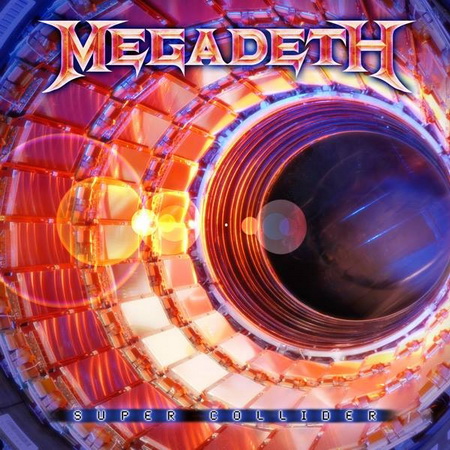
Megadeth-Super Collider-Review
Released this year, Super Collider is Megadeth's second studio album in less than two years. Very productive for a band who are celebrating their 30th anniversary this year. Certainly a "bread and butter" metal act. Nevertheless, the band's recent output has been considered less than stellar, and many consider the band's "glory days" to be long behind them. What do I think? Find out in my first Megadeth review below.
The album opens with "Kingmaker". A great riff powers the song, and it certainly sounds pretty good to me. Dave Mustaine's vocals have never been amazing in the traditional sense, but he sounds pretty good here, ragged from the years, with a mature intensity. Drummer Shawn Drover sounds great, and I can see why Megadeth has kept him around, having one of the longest runs in Megadeth drummer history, a great talent. The lyrics are fairly typical for Megadeth in terms of lyrical content, very focused on materialism, hedonism, and the current state of political and social decay. However, a great song, despite being somewhat "Megadeth by numbers". The title track, "Super Collider" is not typical for Megadeth. More accessible than a lot of their recent material, the song is actual fairly poppy for Megadeth. It is very nice to have original bassist "Dave Ellefson" back in the fold, an amazing bassist, and this song really shows off his talents on the four-string. The chorus is kind of repetitive, but I like the attempt at something new for the band, a clear attempt for Dave Mustaine to step back from the overtly political lyrics that have gotten him in some hot water recently. A good song, quite unique in their long discography.
"Burn!" brings back the heavy. After some shredding, Mustaine comes in with some scathing lyrics about wanton destruction and burning things. One of the most traditional rock songs I have ever heard from the band, like the title track, it is also quite unique in the Megadeth discography. The song seems to be told from the tale of an arsonist, with the words "burn" shouted hundreds of times throughout the song. I like the lead guitars, and the drumming is solid, but the song feels somewhat hollow. Mustaine seems tame here, almost afraid to push his lyrics to the proverbial limit. Not one of my favorite Megadeth songs. "Built For War" sounds like Slayer-lite, and easily the most traditional thrash song on the album. It is nice to see some major riffs coming back after the last two tame songs, but again, the lyrics seem repetitive, and honestly, superficial and held back. I like the eerie chanting that happens in the middle of the song, and the solo is top, but the lyrics keep me from totally loving this song.
"Off The Edge" is another Megadeth tale of mental break-down. Very reminiscent of mid-1990s Megadeth, it is one of the more traditionally Megadeth songs on the album. The riff is very thrash yet again, pretty heavy without being distracting. Mustaine sounds great, as creepy and angry as usual. Great leads top off a pretty good song, one of the highlights of the album. "Dance In The Rain" is another progressive song by the band, incorporating some cool new elements. I like the addition of a string section. The song is basically another warning by Mustaine, telling the tale of an individual broken down by corporations, government surveillance, and life in general. The song is however quite optimistic, telling people to make the most of the current state of social and political decay that most would agree we are in. I really like the song, easily my favorite Megadeth song in years. This is the Dave Mustaine I know and love, speaking his mind without concern. The Metallica like end section is the best part, super fast and heavy, an amazing song.
"Beginning Of Sorrow" seems to be about the conditions that dictate how our lives turn out. A pretty heavy song lyrically, and definitely classic Megadeth. Not exactly a heavy thrash tune, it reminds me again of the bands' 1990s output, more modern metal than traditional metal really. The highlights of the song however are Ellefson's bass introduction, a lovely sound for any metal-head, and very reminiscent of previous triumphs by the band. The acoustic guitars don't really do anything for me on this track, but don't really detract from it. A decent song, but not a true stand-out track for me. "The Blackest Crow" is a definite bold move for the band. A la Volbeat, the band combines American folk influences into a metal setting with banjos and fiddles in the mix. I appreciate the bold attempt by Mustaine, but not a great track for me. Too much a mish-mash of folk and metal, Volbeat honestly do this kind of thing much better in my opinion.
"Forget To Remember" is another step away from thrash and a giant step towards traditional rock. I really don't like the song, sounding somewhat like a 1990s brit-pop band with their amps turned up. Mustaine's gritty and almost spoken-word vocals are not suited to traditional rock songs, and this song is not exception. Easily the worst song on the album, avoid this one at all costs. The album closes with "Don't Turn Your Back". Opening with a bluesy jam, the song then kicks into a thundering metal pound-fest. After a very heavy verse, the song then kicks into a very punky chorus, an odd mix to say the least. I love the heavy thrash of the verses, but the contrast between the two styles is too much for me to take. A lot of potential and some very good drumming, but a very out of place chorus. A cover of the 1983 Thin Lizzy classic "Cold Sweat" is included. Yes, it is as back as you can imagine. Don't even bother if you, like me, love Thin Lizzy.
Super Collider has moments of brilliance. But some major stylistic shifts on some of the songs really don't work. A little too ambitious, it will certainly alienate some of Megadeth's traditional fan-base with a lot of traditional rock elements, banjos and fiddles, string-sections, and pop choruses. Nevertheless, I do appreciate Mustaine's attempt to broaden the horizons of the band, but most us just want to rock like it
Rating-7/10
The album opens with "Kingmaker". A great riff powers the song, and it certainly sounds pretty good to me. Dave Mustaine's vocals have never been amazing in the traditional sense, but he sounds pretty good here, ragged from the years, with a mature intensity. Drummer Shawn Drover sounds great, and I can see why Megadeth has kept him around, having one of the longest runs in Megadeth drummer history, a great talent. The lyrics are fairly typical for Megadeth in terms of lyrical content, very focused on materialism, hedonism, and the current state of political and social decay. However, a great song, despite being somewhat "Megadeth by numbers". The title track, "Super Collider" is not typical for Megadeth. More accessible than a lot of their recent material, the song is actual fairly poppy for Megadeth. It is very nice to have original bassist "Dave Ellefson" back in the fold, an amazing bassist, and this song really shows off his talents on the four-string. The chorus is kind of repetitive, but I like the attempt at something new for the band, a clear attempt for Dave Mustaine to step back from the overtly political lyrics that have gotten him in some hot water recently. A good song, quite unique in their long discography.
"Burn!" brings back the heavy. After some shredding, Mustaine comes in with some scathing lyrics about wanton destruction and burning things. One of the most traditional rock songs I have ever heard from the band, like the title track, it is also quite unique in the Megadeth discography. The song seems to be told from the tale of an arsonist, with the words "burn" shouted hundreds of times throughout the song. I like the lead guitars, and the drumming is solid, but the song feels somewhat hollow. Mustaine seems tame here, almost afraid to push his lyrics to the proverbial limit. Not one of my favorite Megadeth songs. "Built For War" sounds like Slayer-lite, and easily the most traditional thrash song on the album. It is nice to see some major riffs coming back after the last two tame songs, but again, the lyrics seem repetitive, and honestly, superficial and held back. I like the eerie chanting that happens in the middle of the song, and the solo is top, but the lyrics keep me from totally loving this song.
"Off The Edge" is another Megadeth tale of mental break-down. Very reminiscent of mid-1990s Megadeth, it is one of the more traditionally Megadeth songs on the album. The riff is very thrash yet again, pretty heavy without being distracting. Mustaine sounds great, as creepy and angry as usual. Great leads top off a pretty good song, one of the highlights of the album. "Dance In The Rain" is another progressive song by the band, incorporating some cool new elements. I like the addition of a string section. The song is basically another warning by Mustaine, telling the tale of an individual broken down by corporations, government surveillance, and life in general. The song is however quite optimistic, telling people to make the most of the current state of social and political decay that most would agree we are in. I really like the song, easily my favorite Megadeth song in years. This is the Dave Mustaine I know and love, speaking his mind without concern. The Metallica like end section is the best part, super fast and heavy, an amazing song.
"Beginning Of Sorrow" seems to be about the conditions that dictate how our lives turn out. A pretty heavy song lyrically, and definitely classic Megadeth. Not exactly a heavy thrash tune, it reminds me again of the bands' 1990s output, more modern metal than traditional metal really. The highlights of the song however are Ellefson's bass introduction, a lovely sound for any metal-head, and very reminiscent of previous triumphs by the band. The acoustic guitars don't really do anything for me on this track, but don't really detract from it. A decent song, but not a true stand-out track for me. "The Blackest Crow" is a definite bold move for the band. A la Volbeat, the band combines American folk influences into a metal setting with banjos and fiddles in the mix. I appreciate the bold attempt by Mustaine, but not a great track for me. Too much a mish-mash of folk and metal, Volbeat honestly do this kind of thing much better in my opinion.
"Forget To Remember" is another step away from thrash and a giant step towards traditional rock. I really don't like the song, sounding somewhat like a 1990s brit-pop band with their amps turned up. Mustaine's gritty and almost spoken-word vocals are not suited to traditional rock songs, and this song is not exception. Easily the worst song on the album, avoid this one at all costs. The album closes with "Don't Turn Your Back". Opening with a bluesy jam, the song then kicks into a thundering metal pound-fest. After a very heavy verse, the song then kicks into a very punky chorus, an odd mix to say the least. I love the heavy thrash of the verses, but the contrast between the two styles is too much for me to take. A lot of potential and some very good drumming, but a very out of place chorus. A cover of the 1983 Thin Lizzy classic "Cold Sweat" is included. Yes, it is as back as you can imagine. Don't even bother if you, like me, love Thin Lizzy.
Super Collider has moments of brilliance. But some major stylistic shifts on some of the songs really don't work. A little too ambitious, it will certainly alienate some of Megadeth's traditional fan-base with a lot of traditional rock elements, banjos and fiddles, string-sections, and pop choruses. Nevertheless, I do appreciate Mustaine's attempt to broaden the horizons of the band, but most us just want to rock like it
Rating-7/10
Saturday, 22 June 2013
KISS-Lick It Up-Review
Released in 1983, Lick It Up was the first "non-makeup" album from the band. Generally regarded as similar in sound to 1982's Creatures of the Night, most regard Lick It Up as inferior to Creatures. More known for the title track and the revealing of their faces, I feel that the album is often overlooked in the long KISS discography. Let's take a look and see if there is any substance to Lick It Up...
The album opens with the explosive "Exciter". KISS are in full 1980s mode here, very loud and punchy, mainly due to the influence of guitarist/madman Vinny Vincent. Very sexually-charged, it reflects the sound that Paul Stanley would purse for the remainder of the 1980s, a variation of the "glam metal" that was dominating rock music at the time, pop music covered in a metallic shell. The highlight of the song is Vincent's solo, proving that outside of Ace Frehley, he is easily the best lead player that KISS has ever had. A good song, my favorite on the album. "Not For the Innocent" is a pretty heavy tune, very reminiscent of Creatures of the Night, especially "War Machine" off that album. Gene sounds great, and I believe that he only grew as a vocalist during the 1980s and 1990s. I love the gory and sexual lyrics, a perfect combination for the very heavy music. Eric Carr sounds great, and despite the fact that I love Peter Criss, Carr remains my pick for best KISS drummer to date. A fantastic track, great to see KISS rocking hard after the wussy early 1980s pre-Creatures albums.
The title track has never been one of my favorite tracks, but is always stuck in my head, and is easily the catchiest KISS song to date. Very repetitive and shallow, I really do not like the song too much, but can't stop singing it around the house, on the bus, pretty much anywhere. So, I have to respect the song for that fact alone, and I can see why it has endured and helped make the album the relative success it was. Going tit for tat with Paul, Gene comes in with "Young and Wasted". Another heavy tune, it makes Paul's songs look pretty tame in comparison. I love the combination of Vinnie Vincent and Gene, they shared a very special chemistry together and crafted some great rock tunes. This one is not exception. Vinnie's solo is great, like an over-driven version of Ace, but much more technical. The late Eric Carr is a beast on the kit, very loud here, a great complement to Vincent's extremely driven guitars. Gene sounds great, and the lyrics are pretty deep, seemingly about addiction, from what I get, drug addiction.
On "Gimme More" Stanley takes it up a notch as well. Vocally, Paul sounds great as well. I think he did his best vocals in the early to mid 1980s. I'm not crazy about the chorus of the song however, a little ridiculous with its very processed vocal effects. The true highlight of the song is Vinnie's solo, and indeed the main verse riff, the guitar work being the highlight of the track for me. Not bad at all, just not a classic for me. "All Hell's Breakin' Loose" features Paul Stanley rapping. The rap section has never been for me, almost as ridiculous as Debbie Harry from Blondie rapping. But I do like the chorus, classic 80s KISS, very "stadium-friendly", a great crowd-pleaser. "A Million to One" is a power ballad from Paul, a style which would dominate the majority of the rest of KISS' 1980s albums. A classic Paul ballad, I really like the longing Paul evokes on the song. The solo is one of Vinnie's best, and I really like the brief moments of "finger tapping", very 80s.
"Fit's Like a Glove" is a pretty average song. The beginning of a long decline for the quality of Gene songs, I think the song suffers from lack of assistance of Vincent, who helped both Paul and Gene write the majority of the album. Gene sounds almost too aggressive, screaming at the top of his lungs, a disturbing sound. The solo smokes, but an average song to say the least. "Dance All Over Your Face" is another mediocre Gene song. It sounds like "Juke Box Hero" by Foreigner, and I wonder if Gene had outside help with the song, it doesn't real sound like his songwriting style. Whoever wrote it, I find the lyrics pretty misogynistic, a trend that would continue with Gene songs through the 1980s. The song also suffers from the worst production on the album, very tinny sounding. Not a great track. Last up is "And On The 8th Day". Another Gene song, I find it pretty cheesy and lame. Catering to a very adolescent fan base, the song feels tacky for Gene, an attempt to match the "rock free" zeitgeist of the 1980s. Not horrible, but lame.
"Lick It Up" is certainly not horrible, but contains quite a few stinkers. I have never liked the album as much as Creatures, and consider the album the start of a long artistic decline that would consume the band for the majority of the 1980s.
Rating-6.5/10
The album opens with the explosive "Exciter". KISS are in full 1980s mode here, very loud and punchy, mainly due to the influence of guitarist/madman Vinny Vincent. Very sexually-charged, it reflects the sound that Paul Stanley would purse for the remainder of the 1980s, a variation of the "glam metal" that was dominating rock music at the time, pop music covered in a metallic shell. The highlight of the song is Vincent's solo, proving that outside of Ace Frehley, he is easily the best lead player that KISS has ever had. A good song, my favorite on the album. "Not For the Innocent" is a pretty heavy tune, very reminiscent of Creatures of the Night, especially "War Machine" off that album. Gene sounds great, and I believe that he only grew as a vocalist during the 1980s and 1990s. I love the gory and sexual lyrics, a perfect combination for the very heavy music. Eric Carr sounds great, and despite the fact that I love Peter Criss, Carr remains my pick for best KISS drummer to date. A fantastic track, great to see KISS rocking hard after the wussy early 1980s pre-Creatures albums.
The title track has never been one of my favorite tracks, but is always stuck in my head, and is easily the catchiest KISS song to date. Very repetitive and shallow, I really do not like the song too much, but can't stop singing it around the house, on the bus, pretty much anywhere. So, I have to respect the song for that fact alone, and I can see why it has endured and helped make the album the relative success it was. Going tit for tat with Paul, Gene comes in with "Young and Wasted". Another heavy tune, it makes Paul's songs look pretty tame in comparison. I love the combination of Vinnie Vincent and Gene, they shared a very special chemistry together and crafted some great rock tunes. This one is not exception. Vinnie's solo is great, like an over-driven version of Ace, but much more technical. The late Eric Carr is a beast on the kit, very loud here, a great complement to Vincent's extremely driven guitars. Gene sounds great, and the lyrics are pretty deep, seemingly about addiction, from what I get, drug addiction.
On "Gimme More" Stanley takes it up a notch as well. Vocally, Paul sounds great as well. I think he did his best vocals in the early to mid 1980s. I'm not crazy about the chorus of the song however, a little ridiculous with its very processed vocal effects. The true highlight of the song is Vinnie's solo, and indeed the main verse riff, the guitar work being the highlight of the track for me. Not bad at all, just not a classic for me. "All Hell's Breakin' Loose" features Paul Stanley rapping. The rap section has never been for me, almost as ridiculous as Debbie Harry from Blondie rapping. But I do like the chorus, classic 80s KISS, very "stadium-friendly", a great crowd-pleaser. "A Million to One" is a power ballad from Paul, a style which would dominate the majority of the rest of KISS' 1980s albums. A classic Paul ballad, I really like the longing Paul evokes on the song. The solo is one of Vinnie's best, and I really like the brief moments of "finger tapping", very 80s.
"Fit's Like a Glove" is a pretty average song. The beginning of a long decline for the quality of Gene songs, I think the song suffers from lack of assistance of Vincent, who helped both Paul and Gene write the majority of the album. Gene sounds almost too aggressive, screaming at the top of his lungs, a disturbing sound. The solo smokes, but an average song to say the least. "Dance All Over Your Face" is another mediocre Gene song. It sounds like "Juke Box Hero" by Foreigner, and I wonder if Gene had outside help with the song, it doesn't real sound like his songwriting style. Whoever wrote it, I find the lyrics pretty misogynistic, a trend that would continue with Gene songs through the 1980s. The song also suffers from the worst production on the album, very tinny sounding. Not a great track. Last up is "And On The 8th Day". Another Gene song, I find it pretty cheesy and lame. Catering to a very adolescent fan base, the song feels tacky for Gene, an attempt to match the "rock free" zeitgeist of the 1980s. Not horrible, but lame.
"Lick It Up" is certainly not horrible, but contains quite a few stinkers. I have never liked the album as much as Creatures, and consider the album the start of a long artistic decline that would consume the band for the majority of the 1980s.
Rating-6.5/10
Friday, 21 June 2013
Blue Murder-Blue Murder-Review
From the rubble of the collapse of Thin Lizzy, and later being fired from Whitesnake, axe-man supreme John Sykes formed the hard rock/metal super-group Blue Murder. Their self-titled debut album was released in 1989, and has only gone on to increase its reputation as one of the best hard rock albums of the late 1980s. I recently got my hands on a copy of the album, so let's take a look at Blue Murder.
The album opens with "Riot". After some nice synths, and some cool fretless bass, the main riff comes in. Sykes is certainly not a delicate player, and the main riff is very muscular. Not a huge fan of the keyboard and rubbery bass sound, but Sykes sounds great, vocally and in terms of guitar playing. Also, Carmine Appice (yes, Vinny's brother) sounds great on the kit, and any fan of hard rock should be familiar with his very heavy-handed drumming, a perfect fit for Sykes' often screeching guitars. A good song, but slightly dated sounded in 2013 given the cheesy synths. "Sex Child" is the most "hair metal" song on the album. I honestly don't like the song, the bass sound of Tony Franklin is one of the main points of contention, very jazzy and out of place on a sleazy rock song like this, almost like wearing track-pants in a Bentley. Also, there are far too many digital effects on the vocals, and the lame synth strings sound bad, even for 1989 standards. Add that to pretty laughable lyrics, and this one is a dud.
"Valley of the Kings" is probably the most remembered song on the album. I actually like the synthesizer introduction here, it gives an epic feeling to the song. Carmine Appice sounds great as well, very driving on a very steady beat. The mythical lyrics are far more interesting than the previous song, and Tony Franklin also sounds quite good, adopting a more rocky tone for this tune. Very Zeppelin-like, it instantly reminds of Kashmir, with its middle-eastern influenced progressions. A tasty solo completes a very good song. "Jelly Roll" is an attempt at blues, certainly influenced by Led Zeppelin III. Over a bluesy acoustic, Sykes sings about the "evil woman" blues archetype. Some electrics feature in the song, but its mostly acoustic until the second section/solo. But before the solo, the song warps into a 1980s power ballad, complete with strings and effect-covered guitars, somewhat unexpected given the first half of the song, a patch-work song to say the least, but it somehow works. A decent song, but I left feeling as if I had just distinctly heard two separate songs.
The title track comes next. "Blue Murder". The closest link to Sykes' time in Thin Lizzy, the song would have not sounded totally out of place on Thunder and Lightning, the last Thin Lizzy studio album. The vocals are pretty cools, Sykes almost "rapping", spitting out lyrics rather quickly, rushing to get his syllables in, just like Phil Lynott often did. The guitars are great on this track, easily proving why Sykes is considered one of the greatest hard rock/metal guitarist of all times. Tony Franklin also delivers very nice bass work, and it is easy to see why you can find his credits all over rock albums by countless artists. Add some of best rock drumming you have ever heard, and you have a great song. "Out of Love" brings us firmly into the late 1980s. A fairly sappy power ballad, I've always enjoyed Sykes at higher tempos.However, the song is pretty deep and emotional, and I can only guess based on a real break-up. Vocally, it is the strongest song for Sykes on the album, but just not really my thing, especially from hard rock super-group.
"Billy" is loaded with synths, a little too much for me. But once the introduction subsides, a nasty riff kicks in and redeems the song. Syke's machine-gun riffing works nicely in this song, it adds a punch and aggression that balance against the poppy keyboards. The song seems to be about a kid from the "wrong side of the tracks", a common theme in Sykes' song-writing. Catchy chorus, smoking guitars, and a song about lawlessness, what else could a rock and roller ask for? Next is "Ptolemy". After a short introduction sampling what appears to be a bazaar, Sykes comes in with a hugely powerful middle-eastern style riff, very interesting and bold. Another tale of crime and the under-world, I enjoy Sykes' seedy tales of the dark underbelly of cities, obviously an affinity shared by Phil Lynott and Sykes. Franklin's bass is again a little too jazzy for me on this song, especially given the insanely fast metallic soloing of Sykes. The chorus of the song doesn't come in until near the end of the song, a structural strange choice for a song, but Sykes has never really one to follow conventions of standard songwriting. I enjoyed the song, especially the very groove-orientated riff.
Lastly, we have "Black-Hearted Woman". Another song about the rock and roll/blues "evil woman" character, Sykes again angrily tells of a terribly evil woman who ripped out his heart. The riff is stellar, and the chorus is extremely awesome, with Sykes reaching the upper limits of his mid-range voice. The guitars are the real highlight of the track, with Sykes even resurrecting his "tapping" from the Lizzy days. Great song.
"Blue Murder" has a couple of mediocre song, but the album is overall quite good. I would recommend this album to fans of 1980s metal and rock, and especially anyone who has enjoyed the work of John Sykes in any capacity.
Rating-7.5/10
The album opens with "Riot". After some nice synths, and some cool fretless bass, the main riff comes in. Sykes is certainly not a delicate player, and the main riff is very muscular. Not a huge fan of the keyboard and rubbery bass sound, but Sykes sounds great, vocally and in terms of guitar playing. Also, Carmine Appice (yes, Vinny's brother) sounds great on the kit, and any fan of hard rock should be familiar with his very heavy-handed drumming, a perfect fit for Sykes' often screeching guitars. A good song, but slightly dated sounded in 2013 given the cheesy synths. "Sex Child" is the most "hair metal" song on the album. I honestly don't like the song, the bass sound of Tony Franklin is one of the main points of contention, very jazzy and out of place on a sleazy rock song like this, almost like wearing track-pants in a Bentley. Also, there are far too many digital effects on the vocals, and the lame synth strings sound bad, even for 1989 standards. Add that to pretty laughable lyrics, and this one is a dud.
"Valley of the Kings" is probably the most remembered song on the album. I actually like the synthesizer introduction here, it gives an epic feeling to the song. Carmine Appice sounds great as well, very driving on a very steady beat. The mythical lyrics are far more interesting than the previous song, and Tony Franklin also sounds quite good, adopting a more rocky tone for this tune. Very Zeppelin-like, it instantly reminds of Kashmir, with its middle-eastern influenced progressions. A tasty solo completes a very good song. "Jelly Roll" is an attempt at blues, certainly influenced by Led Zeppelin III. Over a bluesy acoustic, Sykes sings about the "evil woman" blues archetype. Some electrics feature in the song, but its mostly acoustic until the second section/solo. But before the solo, the song warps into a 1980s power ballad, complete with strings and effect-covered guitars, somewhat unexpected given the first half of the song, a patch-work song to say the least, but it somehow works. A decent song, but I left feeling as if I had just distinctly heard two separate songs.
The title track comes next. "Blue Murder". The closest link to Sykes' time in Thin Lizzy, the song would have not sounded totally out of place on Thunder and Lightning, the last Thin Lizzy studio album. The vocals are pretty cools, Sykes almost "rapping", spitting out lyrics rather quickly, rushing to get his syllables in, just like Phil Lynott often did. The guitars are great on this track, easily proving why Sykes is considered one of the greatest hard rock/metal guitarist of all times. Tony Franklin also delivers very nice bass work, and it is easy to see why you can find his credits all over rock albums by countless artists. Add some of best rock drumming you have ever heard, and you have a great song. "Out of Love" brings us firmly into the late 1980s. A fairly sappy power ballad, I've always enjoyed Sykes at higher tempos.However, the song is pretty deep and emotional, and I can only guess based on a real break-up. Vocally, it is the strongest song for Sykes on the album, but just not really my thing, especially from hard rock super-group.
"Billy" is loaded with synths, a little too much for me. But once the introduction subsides, a nasty riff kicks in and redeems the song. Syke's machine-gun riffing works nicely in this song, it adds a punch and aggression that balance against the poppy keyboards. The song seems to be about a kid from the "wrong side of the tracks", a common theme in Sykes' song-writing. Catchy chorus, smoking guitars, and a song about lawlessness, what else could a rock and roller ask for? Next is "Ptolemy". After a short introduction sampling what appears to be a bazaar, Sykes comes in with a hugely powerful middle-eastern style riff, very interesting and bold. Another tale of crime and the under-world, I enjoy Sykes' seedy tales of the dark underbelly of cities, obviously an affinity shared by Phil Lynott and Sykes. Franklin's bass is again a little too jazzy for me on this song, especially given the insanely fast metallic soloing of Sykes. The chorus of the song doesn't come in until near the end of the song, a structural strange choice for a song, but Sykes has never really one to follow conventions of standard songwriting. I enjoyed the song, especially the very groove-orientated riff.
Lastly, we have "Black-Hearted Woman". Another song about the rock and roll/blues "evil woman" character, Sykes again angrily tells of a terribly evil woman who ripped out his heart. The riff is stellar, and the chorus is extremely awesome, with Sykes reaching the upper limits of his mid-range voice. The guitars are the real highlight of the track, with Sykes even resurrecting his "tapping" from the Lizzy days. Great song.
"Blue Murder" has a couple of mediocre song, but the album is overall quite good. I would recommend this album to fans of 1980s metal and rock, and especially anyone who has enjoyed the work of John Sykes in any capacity.
Rating-7.5/10
Subscribe to:
Posts (Atom)